Why Exterior Paint Peels and How to Prevent It
· Luxeline Painters
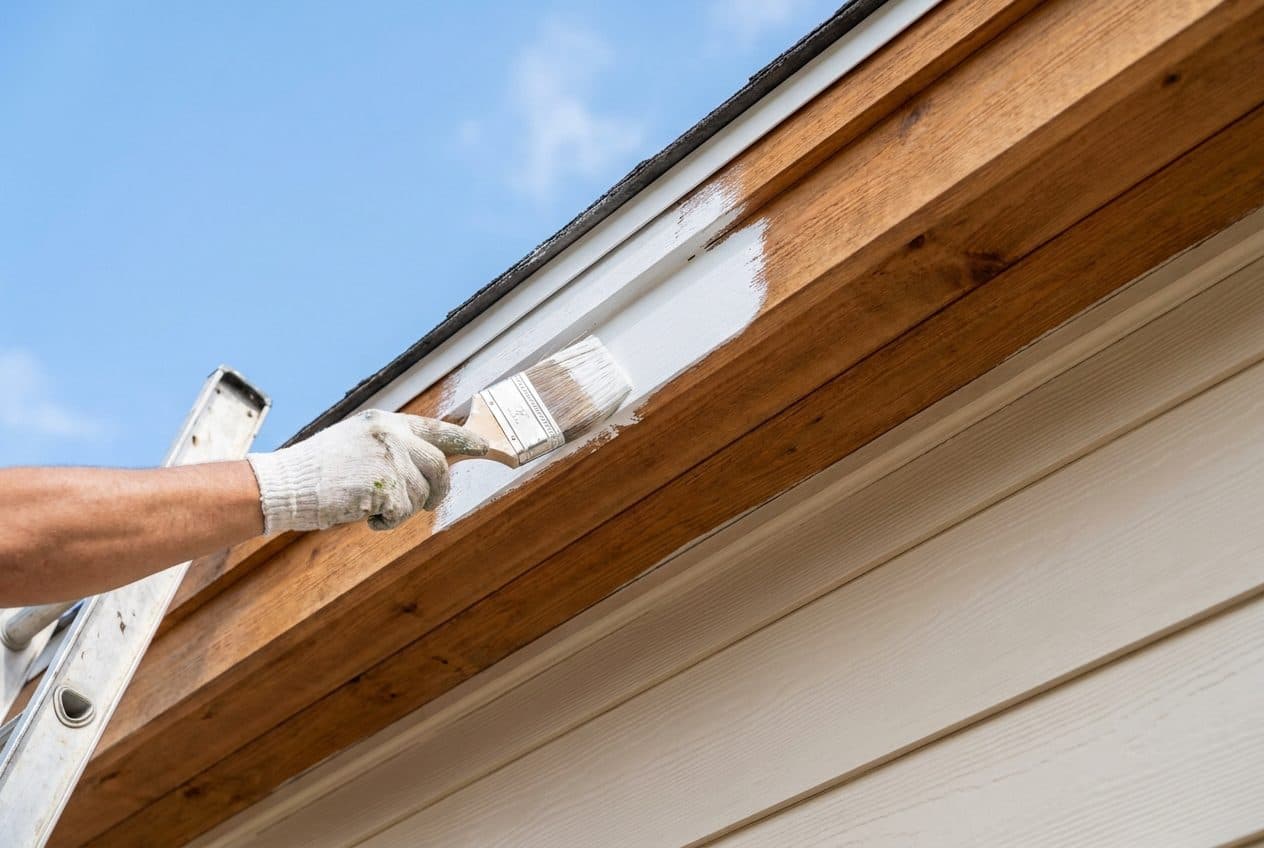
Peeling paint is a symptom, not a mystery. Paint lets go when something breaks the bond between the coating and the surface, and the pattern of the failure usually points to the cause. Finding that cause matters, because repainting over it gives you the same peeling again.
Moisture is the most common cause. Water gets behind paint through open caulk joints, cracked boards, unsealed end grain, and gaps where trim meets siding. Once wood is wet, the sun drives that moisture outward and it pushes the paint film off. Peeling that goes down to bare wood, especially near joints and the bottoms of boards, is a moisture sign.
Look for where the water comes from. Common sources are missing or clogged gutters, downspouts that empty against the wall, sprinklers that soak siding daily, soil or mulch piled against the bottom course, and leaking window sills. Moisture can also come from inside, around bathrooms and kitchens without good ventilation. Paint cannot solve any of these.
Chalk and dirt are the next cause. Old paint that has weathered in strong sun leaves a powdery layer on the surface. Wipe a dark cloth across the wall and you will see it. New paint applied over chalk or wind-blown dust sticks to the powder instead of the wall, then peels off in sheets with the dust still on the back.
Poor prep shows up as paint peeling from paint. If loose and cracked paint was not scraped off, the new coat is only as secure as the old flakes under it. Glossy surfaces that were not sanded or primed give the new coat nothing to grip. This kind of failure often appears on trim, doors, and fascia that had a shiny finish.
Bare wood needs primer. Wood that has been exposed to the weather turns gray and its surface fibers loosen. Paint applied straight onto weathered wood bonds to those loose fibers. The fix is to sand back to sound wood and prime it soon after, before the surface degrades again. Knots and resinous woods need a primer that blocks stains.
The wrong product fails even over good prep. Interior paint used outdoors breaks down quickly. A coating that dries hard and brittle can crack on wood that moves with temperature swings. Masonry and stucco need products that tolerate a porous, alkaline surface, and metal needs a primer made for metal. Match the product to the material.
Too many old layers can be the problem. A house that has been repainted many times carries a thick, stiff build of paint. As the siding expands and contracts, that thick film cracks in a pattern like alligator skin and lets water in. At that point spot scraping is not enough, and the failing areas need to be taken back to a sound layer.
Application conditions matter. Paint applied to a surface that is too hot dries before it bonds and can blister. Paint applied when it is too cold, or just before dew or rain, may never form a proper film. Painting over siding that is still damp from washing traps water under the coating. The product label states the conditions it needs.
Sun-facing walls fail first in West Texas. South and west sides take the most ultraviolet exposure and the widest temperature swings, so they chalk, fade, and crack sooner than shaded sides. Hail adds chips that expose bare wood. It is normal for one or two sides of a house to need attention before the others.
Prevention starts with the surface. Wash off chalk and dirt, let the wall dry completely, scrape and sand everything loose, prime bare and repaired spots, and caulk open joints before any finish coat. Fix the water source first if there is one. Then use an exterior paint suited to the material and the exposure, applied in conditions the label allows.
Small upkeep prevents large repairs. Walk around the house once or twice a year and after any hailstorm. Look at caulk lines, the lower edges of siding, window sills, and fascia. Re-caulking a joint or priming and touching up a chip takes minutes and keeps water out of the wood around it.
If your paint is already peeling, have someone look at why before you choose a color. We offer free on-site estimates, and part of that visit is identifying the cause on each side of the house and explaining the prep needed to stop it from coming back. You get the plan and the price in writing.
Get a free painting estimate
Serving Amarillo, Lubbock & DFW. No-pressure, fast turnaround.